


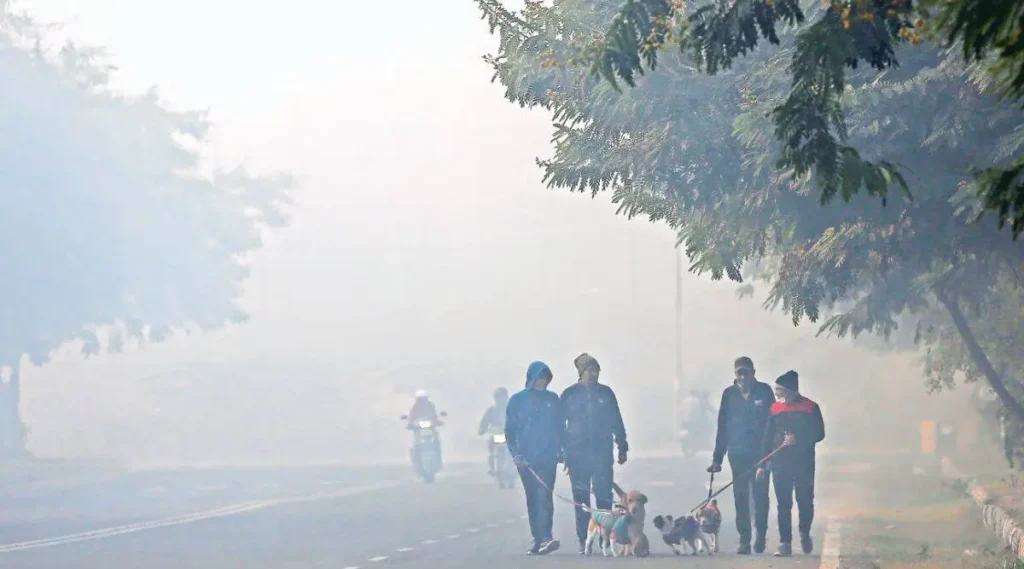
For the seventh day in a row, a blanket of fog has engulfed the city of Delhi, bringing significant disruptions to flights and train services. Sources have reported that the thick pollution is likely to last for the next two days, thus keeping the city and the surrounding regions under low visibility conditions.
A Week of Cancellations and Chaos in Delhi
On Sunday, the dense fog further disrupted flight services at the Delhi airport. In the past week, more than 4,000 flights have witnessed delays and cancellations, and on Sunday alone, more than 100 flights were cancelled and more than 500 flights witnessed delays, according to the data provided by FlightRadar24. The main airlines with cancelled flights are IndiGo and Air India.
However, there was little visibility in certain areas. Safdarjung recorded only 200 meters of visibility at about 2 am on Sunday, and Palam recorded 300 meters on Saturday night. Based on the information by the India Meteorological Department (IMD), if the visibility is below 500 meters, then it is considered fog. However, if the visibility is below 200 meters, then it is dense. If the visibility is below 50 meters, then it is very dense.
Although there is heavy fog in the area, the air quality index has slightly improved. The air quality index on Sunday is 377. Although it is still in the ‘very poor’ category, the air quality has marginally improved from yesterday’s 398. It has been the 11th day that the national capital has remained chocking within the ‘very poor’ air quality category.

Western Disturbance Bringing the Weather Change
This spell of fog is not an unusual occurrence. A western disturbance, which is a weather system that carries moisture from the Mediterranean via Iran and Afghanistan into the Indian subcontinent, has also been responsible for the weather in some way. Due to the collision of the moisture-bearing flow with the Himalayas, snowfall occurs in the mountains and fog and rainfall in the valleys.
The same weather system also brought snowfall, including fresh snow, to Jammu & Kashmir, Ladakh, and Himachal Pradesh on Sunday. Moderate snowfall was witnessed in areas such as Gulmarg and Sonamarg, while many other tourist spots received snowfall. In Himachal Pradesh, moderate to severe snowstorms have been forecast by the IMD for high-altitude districts like Kinnaur, Lahaul-Spiti, and Chamba.
Other railway systems were also affected due to bad weather
Trains, too, did not escape the effects of the thick fog. More than 50 trains have been delayed, and some are running six hours late, said officials in the Northern Railway zone. A long wait, confusion, and changes in their plans meant thousands of commuters for whom the thick fog came as a surprise.
“Temperature Fluctuations Add to the Chill,” Interestingly, despite the thicken fog, temperature varied erratically. The minimum temperature on Sunday recorded 9.4° C, which is relatively higher than the temperature a day ago, which was 6.1° C, and well above the average season temperature. But the maximum temperature was recorded at 18.1° C, which is lower than usual.
Relief in Sight, but Not Overnight
Meteorologists say that the Western Disturbance will weaken by Tuesday. This might help improve the situation in terms of clear visibility, but patchy fog might still occur in Delhi. No warning has been issued by the IMD regarding fog until December 27, but isolated dense fog has been forecast on December 26 & 27.
Experts from Skymet, a private forecasting agency, have indicated the chances of easing in the fog conditions from December 24th to December 31st, but the month of January promises to have a return of the thick spells of the fog. A average January has several western disturbances, which increase the possibilities of thick prolonged spells of the fog.

A Season of Challenges
Since October’s The prolonged fog in the national capital has brought to light its vulnerable transport network during adverse weather conditions. Airport and railway authorities are struggling, and commuters are experiencing uncertain conditions on a daily basis.
However, there seems to be little relief in sight for the next few days, and commuters are advised to remain aware and alert for any changes in weather conditions. Although the fog has provided a picturesque backdrop and a wintry feel, its effects, particularly on transportation, have been substantial. While the capital holds its breath for some clearer skies, here’s hoping that the weather conditions become stable before the new year rush and before the usual spell of thick fog associated with the month of January sets in.
For more information: https://verslog.com/