



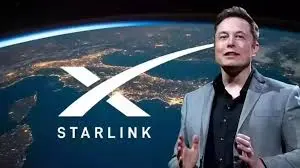
Elon Musk’s Starlink Expands Significantly in India in 2025
Starlink, a satellite internet service developed by SpaceX and helmed by Elon Musk, has made significant inroads in the Indian market. The company has leased its very first office in Mumbai, which will act as a base.
Elon Musk’s satellite internet venture, Starlink, has marked a major breakthrough in carving out an identity for itself in India, which represents a very significant phase of Starlink’s initiative to introduce commercial internet services in India. After reaching various milestones in terms of regulatory approvals and planning, Starlink has managed to acquire space for its first known office, along with a dedicated workspace, both in Mumbai and New Delhi, representing both economic and administrative capitals of India, respectively.
First Official Office in Mumbai for Starlink: A Strategically Chosen Location
The Indian arm of Elon Musk’s global satellite communication service, Starlink Satellite Communications Pvt. Ltd., has leased 1,294 sq ft of office space on the ground floor of Boomerang Commercial Complex in the Chandivli area of Mumbai.
The agreement has a monthly rental component of ₹3.52 lakh, subject to an annual escalation of 5%. The company has also paid a security deposit of ₹31.7 lakh, which is a clear indication that it is there to stay in India for the long haul.
This is Starlink’s first known physical office presence in the country and marks the beginning of its foundation work. Mumbai’s business-oriented ecosystem and access to technology and telecommunication infrastructure make it the appropriate location for the company’s foray into the rapidly growing Indian digital economy.
Another Base in the National Capital: Positioning Near Policy Makers
Apart from this Mumbai headquarters office, Starlink has also acquired another office space location for itself in New Delhi. It has been reported to have already acquired a 50-seater flexible space at the World Trade Center in Nauroji Nagar, in collaboration with CorporatEdge.
This northern hub represents not only strategic significance but also holds a certain symbolism in itself. By establishing itself in Delhi, Starlink secures proximity to major government institutions and telecom regulators, which essentially becomes vital if one considers their ongoing interactions with policymakers associated with the allocation of spectrum, satellite gateways, and more.
Dual-pronged location strategy in Mumbai for business and infrastructure development and in Delhi for governance and regulation, in many ways, highlights the seriousness with which Starlink considers the Indian market.
Gateway Stations & Infra-Structure Plan
For extending internet services across the country, Starlink is said to be planning earth stations at at least nine locations in India. These earth stations form a crucial starting point for flowing data from satellites to various internet devices on the ground.
Mumbai will also have one of these major nodes, with other nodes being provisionally shortlisted in Noida, Chandigarh, and other big cities.
The reason why such infrastructure development is important is that Starlink uses a Low-Earth-Orbit (LEO) satellite constellation and needs ground terminals to efficiently route data.
Regulatory Green Signal: A Turning Point
Starlink’s entry into India has not been the result of hurried actions. A significant milestone has just been reached in early July 2025 as the firm has recently obtained a Unified License from the Department of Telecommunications (DoT) in India. This is a requirement for the provision of satellite communications and broadband services in India.
Further, Starlink was granted approval by the Indian regulatory body for space-based operators, that is, IN-SPACe, for the deployment and functioning of LEO satellite constellations in space.
These two clearances mean that the company is ready to roll out commercial services, which it had been waiting for since the early pilot booking launches in 2021 that drew tremendous interest before being paused due to the lack of licenses.
Why India Significantly Matters to Starlink
- Today, the internet has more than 850 million users, making it the second-largest digital consumer base across the globe.
- There has allegedly been an increase of 286% in internet subscriptions since 2014, said Union Telecom Minister, Jyotiraditya Scind
- The usage of broadband has rapidly escalated by a staggering 1,450% over the years.
- Data prices are down by a staggering 96.6% to become the cheapest data market in India.
Even in the face of this expansion, there are still millions of people who are not served or are not connected at all, especially in rural areas.
Starlink plans to fill this gap by providing satellite internet services, which will not rely on any physical infrastructure on the ground and can easily reach rural areas. If implemented, it will completely change education, healthcare, banking, and e-governance.
The Vision for Rural and Remote Connectivity
Starlink’s LEO constellation supports fast and low-latency broadband internet. Contrary to traditional geostationary satellites that orbit the Earth at an average altitude of approximately 36,000 km, Starlink’s satellites orbit the Earth at a significantly
This cuts down the latency considerably, making possible the following:
- Real-Time Video Conferencing
- Cloud Computing
- Tele-education
- Telemedicine
- online transactions
For India, whose terrains range from the Himalayas to the desert lands, this capability would be transformative.
Why Office Expansion Matters
These new locations are more than just real estate transactions. These office openings symbolize: the first physical proof of operational entry into Starlink. This is a major milestone on our road to readiness to hire the workforce and build partnership ambition to integrate with India’s telecom ecosystem The Delhi office setup also reflects the efforts made by world technology giants such as OpenAI to remain accessible to policymakers to deal with regulatory issues effectively.
Competition and Market Dynamics
The satellite broadband market in India is heating up. Besides Starlink, other main players in this market are:
-
Reliance Jio’s JioSpaceFiber
-
Bharti-backed OneWeb
-
Amazon’s Project Kuiper
However, with the huge unserved areas in India, innovation will probably be fueled by competition as opposed to saturation.

Conclusion: A Milestone Achievement for Satellite Broadband in India-Launched Successfully
The fact that Starlink has chosen Mumbai and Delhi as the sites for its earliest physical presence reiterates the seriousness it has been displaying regarding the Indian market. With the necessary approvals under its belt, as well as the planning for its infrastructure and offices on track, it is going from words to action.
If what Starlink has promised regarding the provision of fast internet connectivity in underserved areas is achieved, it can not only change the rural internet connectivity in India but also help India achieve its goal of fast digital inclusion. With the actual launch of the service on the horizon, all attention will focus on the extent to which Starlink can effectively cooperate with Indian government bodies, telecommunication partners, and Indian citizens in getting its satellite network service launched in India.

Follow for more Information: https://verslog.com/



Alright, 9pgame! Heard some whispers about this one. Gonna check it out and see if it lives up to the hype. Hope it’s got some good action! 9pgame
Just installed the ubet95app.net Betting app. Pretty good interface. I recommend it. Give it a look: ubet95app
You made some really good points there. I looked on the net to find out more about the issue and found most individuals will go along with your views on this website.
If you like the classics, classicslots777 is the place to be. It is a simple place with traditional slots, without much fuss. Enjoy the retro vibes at classicslots777!
I am not sure where you are getting your info, but good topic. I needs to spend some time learning much more or understanding more. Thanks for fantastic info I was looking for this info for my mission.
I?¦ve recently started a blog, the info you offer on this website has helped me tremendously. Thank you for all of your time & work.
dozzhvqxriievxhxhkyfxqwvswsxvh
Thank you for helping out, great information. “The surest way to be deceived is to think oneself cleverer than the others.” by La Rochefoucauld.
Thank you a bunch for sharing this with all of us you really realize what you’re talking approximately! Bookmarked. Kindly also visit my website =). We may have a hyperlink change contract among us
Monitor where your income are happening, Enhance The effectiveness of your sales team together with the correct sales tools.
Hey, you used to write great, but the last several posts have been kinda boring… I miss your great writings. Past few posts are just a bit out of track! come on!
I am sure this paragraph has touched all the internet people, its really really fastidious post on building up new website.
789com, huh? Jumped in for a look. It’s pretty standard, nothing too exciting. Layout is okay, but could be more modern. Worth a look if you’re bored: 789com
Just browsing around and stumbled upon 76fbet. Not bad, not bad at all. Clean interface, and seems to have a good selection. Might become my new go-to. Give it a look: 76fbet
Just logged into verabetlogin, and it’s pretty straightforward. Getting started was super easy, which is always a bonus. Quick and painless login! Here’s the link: verabetlogin
Thank you, I have recently been looking for information about this topic for a while and yours is the greatest I have discovered so far. But, what concerning the conclusion? Are you certain about the source?
I am curious to find out what blog platform you are using? I’m experiencing some small security problems with my latest blog and I’d like to find something more risk-free. Do you have any solutions?
I used to be suggested this blog via my cousin. I am no longer positive whether or not this put up is written by way of him as no one else know such particular about my trouble. You’re wonderful! Thank you!
It’s truly a great and helpful piece of information. I am satisfied that you shared this helpful info with us. Please keep us up to date like this. Thanks for sharing.